Fast Car Lyrics: What Do They Mean?

The song Fast Car came on the radio, and I thought, “Man, this sounds familiar.”

It was like I already knew the lyrics, intrinsically, but the voice seemed so different than how I remembered it.

I sang along to the parts I knew, told my wife I needed to look it up when I got home, and sure enough, I was onto something. In this brief article, I’ll breakdown where the song came from, what it means, why it’s significant, and what we can learn from it.

The Origin of Fast Car

The original Fast Car song was written and performed by Tracy Chapman.

It was released in 1988 as part of her debut album.

Tracy, a black woman, grew up in Cleveland, Ohio, an industrial city with a mostly blue collar background.

In an interview with the BBC, she said she saw the song as a way to express the stories of the people she saw and knew growing up, who were struggling, working hard, hoping things would get better.

Now, in 2023, Luke Combs, the famous country star, is performing the song and it has become a hit on the Billboard Charts for multiple weeks. He’s said that he’s been performing the song at live shows for over 6 years now and crowds across the country relate to it. Here’s why everyone can relate…

fast car, lamborghini murcielago

The Meaning of Fast Car

Fast Car is about a young couple, trying to escape their current reality and create a new life together. But they encounter the same challenges of their past and struggle to find a path forward.

Of course, you can read multiple people’s interpretations of the song on Reddit, music forums, and other places on the internet.

At it’s core, the song Fast Car covers themes of:

  • Poverty
  • Alcoholism
  • Generational cycles
  • Running away from the past
  • Heartbreak
  • The power of hope
  • The American Dream
  • Young love vs. old love
  • The bliss of new couples
  • The consequences of bad choices

The first couple themes mentioned seem obvious to most listeners. The lady in the song grew up with an alcoholic dad, had to take care of him using her own meager paycheck from working at a convenience store, and now decides it’s time for her to go live her own life.

So many people can relate to this, right? Living in poverty, with an alcoholic parent, and feeling like they have to raise their own parents.

But many of the interpretations I’ve read overlook the power of hope. And what about the bliss of new couples?

“Your arm felt nice wrapped around my shoulder.”

She had a feeling that she belonged and she could be someone. She had hope for a new life, a place where she was valued and loved and cared for, instead of having to be her dad’s caretaker.

That’s what young love feels like.

The couple is ready to run away from their past, to move to a big, new city, create a better life for themselves, and they have dreams and plans of both working in meaningful jobs. They’ll get promoted and move to the suburbs.

This is the dream of so many people, the American Dream, if you will.

So she gets her job and pays all their bills, but he never gets a job, never does his part. He becomes the deadbeat dad to their own kids, becomes the alcoholic himself. The generational cycle continues.

And it makes you want to cry, right?

All these hopes and dreams just going down the drain.

The heartbreak, the turmoil, the 2am fights when he comes home drunk from the bar, and the kids are woken up to their parents fighting.

You can just picture it. You can feel it.

The consequences of bad choices are stacking up.

So where does old love come in?

The Significance of Fast Car

As you see the story develop and you feel the situation escalate, you want the young man to grow up. You want him to figure out his own life and quit being a deadbeat dad. You want him to leave the bars and step into his role as a husband and dad.

But you know it won’t work out.

It won’t work out unless something drastic changes. Unless the woman puts her foot down and tells him he has to leave.

So she does.

She shows old love.

The old love, the mature love, the love that says, “I love you too much to let you keep destroying yourself. I love you too much to let you waste away. I won’t let this generational cycle happen to us too. I won’t let you destroy me and the kids, like my dad almost destroyed me. I won’t let it happen.”

So the song ends, “You got a fast car. Is it fast enough so you can fly away? You still gotta make a decision. Leave tonight, or live and die this way.”

Will the wife force the husband to leave?

Or will she have to take the kids and leave?

And what happens next?

Will he live in self-pity and become another lonely alcoholic? Or will she stay and die on the inside watching him destroy himself and give up on all her own hopes and dreams? Will resentment and bitterness win?

Or will the cycle be broken?

We’re left with a giant question mark. And it’s the most beautiful ending.

What Can We Learn From The Song

That, in my mind, is why Fast Car is such a hit. The beauty is that it ends in the open question: What’s going to happen next?

Are you going leave tonight, or live and die this way?

Every single day, couples live through this experience. Maybe it’s not alcoholism, maybe it’s a drug or porn addiction instead? Maybe it’s not poverty they’re leaving, maybe it’s leaving the overbearing and controlling rich parents who are funding everything and now they’ll have to risk it and make it on their own? Maybe it’s not going to live in the city, but it’s escaping the city to go live in the country?

But the couple has a dream. Then the young couple faces real life, tough situations, setbacks and challenges, some self-induced and some external hardships. And you come to a point of decision.

Are you going leave tonight, or live and die this way?

My wife and I lived through this point of decision a few times. Man, is it painful!

But every time, we’ve refused this dichotomy. There’s no car fast enough to fly away. Running from our problems will never result in the life we want. On the other hand, neither of us are going to accept living and dying in misery.

So we’ve consistently chosen the third option.

To suck it up, work on ourselves, each get better, and break the generational cycles.

And that third option, my friends, is a beautiful way.

Are you going leave tonight, or live and die this way?

Or, will you live into the third option?


PS: I’ve made a resource to help people who are trying to live into the third option. There’s no obligation to take it, but if you want it, here it is and I know it’s helped a lot of people, including myself.

Create Your One Page Life Plan

Processingโ€ฆ
Success! You're on the list.

What is the Main Problem in Christianity? These 5 Answers May Surprise You

Today was Sunday. I didn’t go to church. Even though I’m a Christian, who has attended Bible College and seminary, actively following Jesus, and living in the U.S., I didn’t go. Why is that?

Practically speaking, my son had a hockey tournament. But even so, I’m probably not going.

The reasons are many. The reasons are deep. Usually, that answer is enough for people who ask me.

But others are actually asking for more of an answer. They genuinely want to know: what is the main problem in Christianity? What’s wrong?

Why would a guy like you, who takes your faith so seriously, quit going to church? And not just for a couple weeks, or even a couple months, but a couple years? Four or five years out of church? Why?

Well, my friend, buckle up and let’s go on a journey. This isn’t going to be all about airing out my dirty laundry or others’ dirty laundry. This will include personal experience, but it will also include deeper observations about the state of the church in America, the institutions and social structures, and the underlying trends and currents I’m seeing.


Statistics & Trends – 5 Main Problems

Let’s start with some basic trends, aka observations in the news. The first problem with Christianity may not be unique to the church, but it’s one that Christians must learn to adapt to if they plan to have any positive impact in culture:

  1. Most people have shorter attention spans, so sitting through a 45-60 minute “sermon” or “lecture” isn’t appealing. Source: Ranieri and Co
  2. Denominations across the board are experiencing declining numbers. Source: Christianity Today
  3. Big denominations have had lawsuits and scandals amongst their highest ranks, most recently the Southern Baptist Convention’s sexual abuse scandal. Source: The Guardian
  4. Political bigotry and nationalism have hit new levels in churches. Source: The Atlantic
  5. Pastors are not seen as trustworthy, and people (including myself) are becoming more skeptical of their motivations and character. Source: Barna Group
What is the Main Problem in Christianity - Are Pastors Trustworthy?

On bullet point one, I can sit and focus for incredibly long periods of time actually, so I don’t struggle with that. What I struggle with is a trend toward fluffy sermons, unprepared sermons, and/or lifeless sermons. I want to know the pastor prepared, that he or she means it, that they live it with conviction.

On two, I struggle with pretty much every denomination, even the “non-denominational.” Too much human interference and red tape, or simply irrelevant.

On three, it’s atrocious. Gross and unacceptable.

On four, the same.

On five, yeah, I’m in the skeptical 24%+. Given the scandals of Hillsong, Ravi Zacharias, Bob Coy, and so many others, I’m not defaulting to trust when I meet a pastor.

Now, I have a couple friends who are pastors (or former pastors) and they’re great. But anytime I meet a new one or hear about a new one, I’m guarded.

What Happened to Me

I promised I wouldn’t make this all about airing my dirty laundry. I’m simply trying to answer the question of what’s the main problem in Christianity and why I don’t go to church, in more depth.

Here’s what has happened to me personally, in a nutshell (you’re welcome to stop reading anytime if you don’t want to hear it):

  • My parents were lied to by a pastor when I was a kid.
  • My sweet ol’ grandmother, who had a true giver’s heart, was taken advantage of by TV preachers doing the prosperity gospel tricks of the 1990s.
  • When I went to Bible college in 2006-2008, I started reading “emergent” and “unorthodox” books. Due to my wide reading and desire to study broadly, the leadership refused to put me on staff and warned people to be careful in their conversations with me. I felt like I got excommunicated. Not burned at the stake, but definitely banished like a leper outside the camp.
  • After I licked my wounds and recovered from that experience, my wife and I attended a wonderful church in Portland, Oregon for a year. Then, upon moving back to the midwest, we really struggled to find any place that was open-minded enough to settle into. Met some great Christians, some not so great ones, but it felt like we were just going through the motions.
  • Eventually, a few years later, our family found a church in Ohio that we liked. We got plugged in. They needed volunteers. We volunteered for pretty much everything. Then, I burnt myself out on doing too much. Then, a couple controversies came up that made us cringe at what leadership was allowing. Then, something happened to my wife…

What Happened to My Wife & Other Women

I’m astounded that my wife will step foot in a church. She was harmed, threatened, mistreated, and abused “in Jesus’ name,” as a child and as an adult.

While I don’t want to tell her entire story in this article because it’s not my place and parts of it are already in a book, suffice it to say, it hasn’t been pretty. As a kid, she was raised in multiple unhealthy churches, along with an unhealthy family, and all kinds of unacceptable behavior in both.

As an adult, she had to step down from a leadership position because people in church were uncomfortable with how strong of a presence she was, how pretty she was, and how she lived and spoke with conviction when she was allowed to share in groups.

After she wrote her book, many other women began to confide in her that they experienced similar things. Again, not my place to share their stories, but I can say this in full truth and sincerity:

So many women have been abused in the church. Sexually abused, verbally abused, emotionally and mentally abused. Told they’re too much. Told they’re not allowed to lead or speak. This should not be so.

I won’t stand for it when I see it happening in a church, or even in the workplace. Women should be treated as the crown of creation that they are.

What We All Crave vs. The Current “Christian” Groups

I firmly believe every human, extrovert or introvert, craves connection. Even an extreme introvert like myself craves connection. I don’t want it with thousands of people and loud crowds. I want it with a few close friends, mentors, and mentees.

Deep relationships, a supportive & diverse community, and intimacy with my spouse. That’s what I want, and I’d venture to say that’s what you want.

Over the years, my wife and I have encountered many different walks of life in our friendships and relationships. Here are the patterns we’ve found: the “Christian” group has tended to be full of cliques, backbiting, hypocrisy, and pettiness. Not always, just often enough to be a trend. But…

The practicing pagans, the non-religious (aka the Nones), the agnostics, the Jewish, Muslim, and Buddhists have been the folks we’ve connected with on a deep and meaningful level. We have more authentic relationships, more honest conversations, and frankly, more fun. We smile more. We laugh more. We just enjoy these folks more.

So, I call these folks my friends. That’s my “church.” A community of misfits. A group of folks who know how to be real with each other, who don’t always agree, but always love to help each other out. I spend time with them on weekdays, in the evenings, on random Saturdays. When I read 1 Corinthians or Ephesians, this sounds a lot more like the type of group Paul was encouraging.

It wasn’t “Christian” groups that had polished Sunday services, with a mini-concert, perfectly timed transitions, shallow prayers, and self-help sermons with powerpoints.

Paul’s churches didn’t have coffee lines, their own radio stations, Christian hoodies and trinkets for sale, pastors wearing $10,000 watches, $500 boots, and designer shirts or suits posing on magazine covers.

Church was supposed to be a house of prayer and meeting people’s needs, not a house of merchandise. Jesus said something like that, right? When he flipped the tables?

When Jesus hung out with his disciples, it was a group of ragamuffins, searching and trying to find God, trying to live into honesty, integrity, love, joy, peace, and all the rest of it. Failing at times, but failing forward and getting up, not backward.

When Paul wrote his letters to the various churches, some were Jewish, some were Christian, some were pagan, some were seekers.

Misfits, on the fringes, but genuinely trying to seek and find God.

A Call for Reform

That, my friends, is why I’m seeking reform. I don’t know if I’ll post my own version of the 95 theses, like Martin Luther, anytime soon. But I’m not going to church, not in a modern, evangelical, American church.

I’ll try something distinctly different.

Perhaps older, more community-driven, less facade.

Maybe a new thing, a fresh thing, deeper and raw, a space that welcomes all.

That’s my type of church.

If you enjoyed this post, you might enjoy one of my books. (Just click the image below)

OmerRedden.Books.AvailableOnAmazon

One Page Life Plan Review (Summer 2022)

I used to have a rigid routine of reviewing my One Page Life Plan each quarter. The past couple years, it’s been more of an organic happening. I feel a shift in my bones, I listen to it, and I take a couple hours on a weekend to sit with it.

Anyone who knows me well knows that I am a goal-oriented person. As some wise ones have quipped in the past,

“If you aim at nothing, you’ll probably hit it.”

Anonymous

Well, I’m in the opposite boat. I’m certainly aiming at something. The target is, “Well done, good and faithful servant.”

The way I get there is by following my One Page Life Plan and setting yearly goals. I’ve been doing this for almost 10 years. And I set them in accordance with the wheel of life.

In this post, I want to break down the season of Summer 2022, on my way toward that target:

Family Goals

Family Goal 1: Improve our marriage in consistent, tangible, meaningful ways

Family Goal 2: 1 date per month with each kid, meaning each kid gets 1 per quarter

On the first family goal, my wife and I have had our best year of marriage, for sure. I’ll spare you all the juicy details (maybe share another time), but last year was rough for us. Last summer, we came very close to separating. But I worked on myself in counseling and she kept working on herself in counseling, and we had some very candid conversations to sort through past junk.

This year, our marriage is much better.

Still areas for improvement? Yes.

Still need to continue working on ourselves individually? Yes.

But she would say and I would say, we’re in a much healthier place. Some of this has come through date nights and more intentional time together. But a lot of it has just been better communication: telling each other how we’re feeling, showing each other compassion, and picking up the slack when the other is struggling. Seeing and listening. Really seeing. Really listening.

For the second family goal, I’m right on pace. Each kid has had 2 dates with me so far and the 1-1 time is huge. They really look forward to it, and if you’re a parent, this is a great practice to start.

Author Goals

Author Goal 1: Sell and market my existing books better

Author Goal 2: Revise and re-release an old book with a new spin

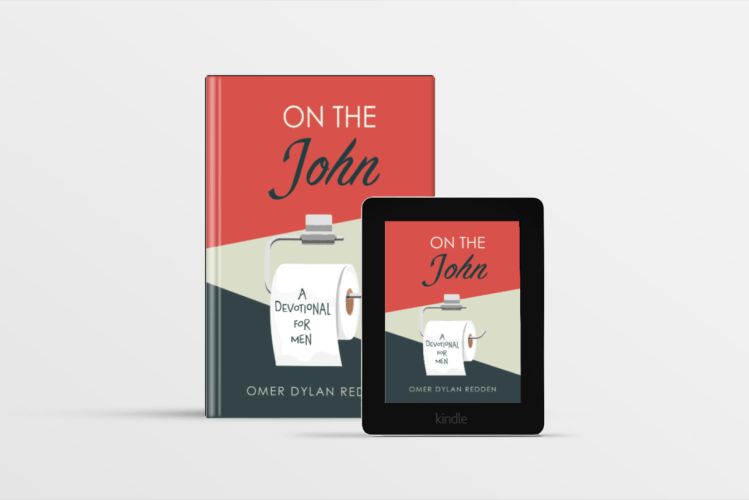
The first author goal is going well. I’ve run a couple giveaways, I’ve run Amazon ads, and I was able to have my highest sales month, outside of a launch, with 300+ books sold. My book, On the John: A Devotional for Men, has been selling very consistently all year long.

My re-release is in the making.

Health Goals

Health Goal: workout 3x per week to look chiseled and fit at 35-36

I don’t know if I’ve say I’m chiseled, but you can see my abs at 35. And I am working out 3x per week. Stretching more than lifting.

Travel Goals

Travel Goal: Go to 12 places I’ve never been

I’m just a smidge behind pace on this goal. Gas and flight prices have put a bit of a damper on my original plans. So instead of going long distances to far away lands, I’ve found myself going to more nearby places that I haven’t been to.

Regardless, it’s always fun to get out and get away.

Finance Goals

Finance Goal: Invest set amount per month with 33% return

Finance Goal: Follow budget within 10% and give more consistently

Finance Goal: Max the match on 401K

I’ve been investing very heavily, but in a different direction than I normally would. I would say we’ve been spending over budget because of all the travel we did for baseball this summer and because of Hannah’s Mrs. Wyoming and Mrs. America competition. But I’m happy to be over budget on those things. On pace to max the match.

Spiritual Growth Goals

Spiritual Growth Goal: Write 12 blog series and plan Bible reading

Man, it’s tough to write this one out. I have fallen off my Bible reading plan. I’ve been reading, but it’s been sporadic. And for blog series, I think I’ve completed 4 on the year, when I should be at 7.

Perhaps, I shouldn’t have measured the goal in this way. Because what’s happened is I feel closer to God than I have in awhile. I’ve prayed more, I’ve read more, I’ve been more open to the still small voice.

But if I want to hit the goal as I wrote it out originally, this is the one goal that I really need to improve on so I can finish strong on the back half of the year.

Theme of the Year

Theme: Go BIG! Dream big, plan big, pray big. See what happens.

This has been green all year long. I’m really excited about what I’m working on, where things are heading, and what’s coming.

Keep dreaming big.

Keep planning big.

And keep praying big.

Let’s see what happens!

The Daily Omer. LifeDoc. Omer Dylan Redden

What are the Imprecatory Psalms?

Have you ever wanted to call down a curse on someone?

Have you ever been so mad at someone that you wished bad things upon them?

Yeah, it’s a natural thing. It’s part of our human condition. People offend us, annoy us, or harm us, and we get upset. Rightfully so.

In this article, I want to answer three common questions about the imprecatory Psalms:

What does imprecatory mean?

Merriam-Webster defines “imprecate” in this way: to invoke evil upon; to curse.

Other synonyms might be:

  • Ban
  • Afflict
  • Maledict
  • Anathematize
  • Vigorous denunciation

I love words, but those sound pretty rough, right? Who would ever wish those things upon someone?

I can almost hear the spelling be judges now…you’ve spelled it, you’ve defined it, now could you use it in a sentence please?

Sure! Let me give you a quick example of how you could use imprecatory in a sentence and where it would make sense:

If you’re a parent and someone purposefully harmed your kid, would that get you fired up?

What if that person sexually abused your kid, would that get you fired up?

What if that person was someone in your own family, or someone that you had trusted, would that get you fired up?

It would get me fired up.

I would, for sure, pray imprecatory Psalms on that person!

So there’s a definition and example of where an imprecation would be feasible.

If you’re calling upon a power (or God) to send injury to another, it better be for a darn good reason.

What are the imprecatory Psalms?

The Psalms have a few different flavors, and they can be divided in a myriad of categories, depending upon who you ask. I’ll divide them up in this way:

  • Imprecatory Psalms
  • Celebration / Praise Psalms
  • Lament Psalms
  • Wisdom Psalms
  • Remembrance / History Psalms

The imprecatory Psalms are actually quite abundant. All of these Psalms include prayers against an enemy, and the lines in them aren’t exactly the type of things we’d expect a “saint” to say:

  • Psalm 7, 35, 55, 58, 59, 69, 79, 109, 137, 139

Now, you have some Old Testament proof that imprecatory Psalms are ok to pray. But I can already hear the dissenters, “But that was the Old Testament, and in the New Testament, Jesus tells us to love our enemies and pray for those who spitefully use us.”

And here’s my reply:

Yes, Jesus did say that. But Jesus also called the Pharisees to the carpet in Matthew 23. That whole chapter sounds like imprecations to me: “Woe to you, scribes, Pharisees, hypocrites!”

And Jesus also flipped over the tables (and made a whip to drive out people and animals) in the temple courts, because they had made it a den of thieves instead of a house of prayer.

And Peter and Paul invoked some curses upon folks in the book of Acts. And Paul invoked some curses in Galatians and 2 Timothy.

For many centuries, the test of doctrine has been:

  1. Was it taught or demonstrated by Jesus?
  2. Did the apostles do it in Acts?
  3. And is there teaching or examples of it in the epistles / letters?

If the answer is “yes” to all three, then it’s good to be accepted. It sure looks like imprecations upon the enemy are still acceptable.

Now, should we work to forgive the transgressor? Absolutely. But forgiving is not the same as reconciliation. Forgiveness doesn’t mean we accept what they did as right. It doesn’t mean we have to have a good relationship with the person. As Mike Foster has said:

“Sometimes continuing the relationship is both impossible and inadvisable.”

Mike Foster

Now that you know what the imprecatory Psalms are, where you can find them and other imprecations in the Old and New Testament, it’s now time to answer the question:

Can I pray imprecatory Psalms? Should I pray imprecatory Psalms?

I think you know where I’m going with this. It’s true: people offend us, annoy us, or harm us, and we get upset. Rightfully so. That’s our sense of justice kicking in. If you weren’t getting fired up at the example I shared in the first section of this post, then I’d check your pulse.

But we also know our own limitations, and we know we shouldn’t take revenge, so we have to ask for help from above. Perhaps God will see fit to handle that person for us.

There is nothing wrong with praying imprecatory Psalms. We can be honest with God in our hurt, our pain, our grief. He’s big enough; He can handle it.

In fact, we should be honest with God in our hurt, pain, and grief. If we can’t be honest in our private prayers to God, who can we be honest with?

So yes, you can pray imprecatory Psalms. Yes, you should pray imprecatory Psalms. If David, Jesus, Peter, and Paul did it, you can do it too.

Just be careful you don’t do something to be on the receiving end of someone else’s!

If you have experience praying the imprecatory Psalms, let me know in the comments.

On the John. A Devotional for Men
Looking for a fresh devotional?

Grab Your Copy Today!

The Sabbath Series: How to Not Screw Up Sabbath

For years, I screwed up Sabbath. I mean, I could not rest.

Have you ever experienced that?

Even on my days off, I had to be busy, I had to be doing things. If I didn’t “feel productive,” I was miserable. Even if it wasn’t a full day off, but it was supposed to be a birthday party or a get-together with friends, I would feel antsy, checking my phone to see if there was anything I could “do.” Just longing to get something done, anything.

I was a wreck. The only way I could experience Sabbath was by sleeping.

In this post, I want to show you how to NOT screw up Sabbath. First, we’ll look at two ways you can screw up Sabbath. Then we’ll look at how to recognize your signals for needing rest. Finally, we’ll talk about how to do Sabbath well.

Two ways you can screw up Sabbath

First, you can screw up Sabbath by doing way too much. It’s Saturday and you’re “off,” but you’re not really off. You’re still on your phone, checking emails, social media, and the news. You’re still running places, picking up things at the store, dropping off kids at birthday parties, and going to sports and social activities.

Maybe you’re not doing those things, but you’re staying at your house and stressing yourself out. The to-do list is massive, so you’re cleaning, washing dishes, doing laundry, dusting, mopping, mowing the grass, weedeating, sorting and organizing the garage. You’re a fury of activity. You’re playing Mr. Clean or Mrs. Meyers and at the end of the day, you find yourself exhausted.

The second way you can screw up Sabbath is by doing absolutely nothing. You can work so hard during the week and run yourself so ragged that when Saturday comes (or Sunday if you do it on the wrong day *wink*), you have nothing at all in the tank.

So you sleep in until 11am or noon. Then you mozy into the kitchen, grab something to eat, and fall asleep on the couch afterward. You sleep another couple hours, wake up and eat dinner, then fall back asleep.

What’s wrong with that you say?

I commend you for getting rest. The Sabbath is supposed to be a time of rest, absolutely. But it’s also supposed to be a time of rejuvenation.

If you’re in zombie mode the whole day and can’t do anything but sleep or “veg,” there might be a problem with your week and/or your health. You might be ignoring some of your body’s signals.

How to recognize your signals for needing rest

I don’t know your signals, but I have learned mine. As I share my list, maybe it’ll prompt some self-examination to find your own signals. Here are some of mine:

  • Cranky or irritable, short
  • A general sense of frustration / annoyance, grumpy
  • Longing to get away
  • Overly sensitive to noise or light
  • Feeling of uneasiness in my spirit
  • Eyes hurting or twitching
  • Tightness in my shoulders or my toes (the two places I store stress)

It took me well into my adult years, but I finally learned how to recognize these signals for needing rest.

What are yours? Write them down.

How to Do Sabbath Well

If Sabbath is one part rest and one part rejuvenation, we need to learn how to do both well. Here are some simple activities to do Sabbath well:

  • Read the Scriptures
  • Read a book
  • Listen to or play your own relaxing music
  • Have a picnic in your yard, or a simple but special meal
  • Throw a frisbee, or play catch with a football or baseball
  • Take a short walk around your property
  • Enjoy a nap
  • Sit and talk with someone you love
  • Reflective writing / journaling / creative writing
  • Drawing, sketching, painting

Of course, I’m sure you can come up with a variety of other fun things to do on Sabbath. These are just a few I normally do, because I find them rejuvenating and simultaneously, restful. Creative activities, but not work by any means.

I hope this post helps you live a more joyful, integrated life.

Next Step

If you’re looking for more posts in The Sabbath Series, check out these articles:

If you’re looking for a free resource to help you be successful in all areas of life, check out this page.

The Sabbath Series: What is a Yearly Sabbath?

A yearly Sabbath is a series of celebrations, festivities, holidays, and/or vacations spaced adequately throughout the year.

When you read the Old Testament, you hear about all these different festivities that the Israelites celebrated. Sure, they had their weekly Sabbath, but they also seemed to have these seasonal or yearly Sabbaths.

Then, you look at our American culture and you realize we have some of this, but our holidays look a lot different.

In this article, I want to look at this concept of yearly Sabbaths from three angles:

American Holidays

In the United States, we celebrate quite a few holidays. Or at least we say we do. But when it comes to actually honoring those holidays, everyone has their own flavor of doing it.

Every company chooses which ones they follow. In most companies, you’d be hard-pressed to find 10 paid holidays. In the company I work in, we have 10 exact.

If you’re in retail, hospitality, or the restaurant industry, you might only get two, if that.

Yet if you have a government job or work in education, you likely have close to 20 holidays.

If you’re a teacher or professor, you get a whole summer off! That’s usually 10+ weeks. And you get a winter break (2 weeks), a fall break (2-5 days), and a spring break (1 week). Holy moly!

Here’s a list of the most commonly honored holidays:

  • New Years Eve
  • New Years Day
  • Good Friday or Easter Monday
  • Memorial Day
  • Independence Day
  • Labor Day
  • Thanksgiving
  • Christmas
  • TOTAL = 10 days

*Some companies will give you the day off after Thanksgiving (aka Black Friday) or Christmas Eve.

Here’s the problem with all of those holidays… they’re all one-day holidays! So unless you take additional vacation days around those holidays, you’re usually not going to get more than three days off in a row.

I don’t know about you, but there are plenty of times when it would be nice to have more than three days off in a row!

Israelite Holidays

When you read about the Israelite’s history in the Old Testament, you come across a lot of festivals and holidays. Honestly, when I first read it, I thought, “All these Israelites do is party and celebrate!”

Here’s a list of the holidays from the Old Testament, along with the length of days:

  • Purim (2 days)
  • Feast of Unleavened Bread – Passover (8 days)
  • Pentecost – Shavuot (1 day)
  • Feast of Trumpets – Rosh Hashanah – ending with Yom Kippur (10 days)
  • Feast of Tabernacles – Sukkot (7 days)
  • Feast of Dedication – Hannukah (8 days)
  • TOTAL = 36 days

For 2022, there are even more Jewish holidays than this. Some celebrate wars won and independence, or some honor tragedies of the past, like the Holocaust.

But look at the difference between American holidays and Jewish holidays. Americans take 1 day at a time and only take 10 total. Our Jewish friends only have one holiday which is a single day. Most of them are a full week or more. And they have 36 total days off. That’s over a full month each year!

It would appear to me that the Israelites of old and the Jews of today understand the importance of taking time off.

How can we blend the best of both and create Yearly Sabbaths?

I’ve said it before, but I’ll say it again: We, as humans, need rest. We need to cease from our labor. We are not cogs in a machine. We are not robots. Our batteries need to be recharged and changed every once in a while.

It’s very hard to get recharged in a weekend or three-day intervals. Hence, we need longer vacations on top of our yearly holidays. Some people do great at this and take at least two big vacations (yearly Sabbaths) per year. Maybe they travel, maybe they don’t. But they take two full weeks off, and they enjoy it.

Other people do horrible at this and hardly take any time off. They might even work on the company holidays because they feel behind or are offered double time or whatever. In two of my jobs, I totally fell for this trap. I’d work a holiday to try to get ahead, even though I was in a salaried position. Or, in the other job, I’d work a holiday for double time because I thought we needed the money more than I needed the rest.

Wrong!

Working on holidays is a bad idea. Not taking time off is a bad idea. Burnout is real. I’ve experienced it (and written about it in another Sabbath Series post).

So here’s what I propose we do:

  • We take at least two large vacations per year. Take a full week off. Don’t work for 7-10 days straight, so you get 14-20 days off in those two big vacations.
  • We take two smaller vacations per year. At least 4 days off in a row, if not more. Don’t work for 4-6 days straight, so you get 8-12 days off in those two smaller vacations.

If travel is refreshing for you, travel. If staying home is refreshing for you, stay home. But don’t work! Don’t do a single bit of it!

Enjoy your rest!

Take yearly Sabbaths!

Next Step

Be sure to check out the rest of The Sabbath Series, as it develops.

If youโ€™re looking forย a free resource to help you be more successful in all areas of life, check out this page.

The Sabbath Series: What is a Daily Sabbath?

A daily sabbath is a daily reset. It could be a nap, meditation, deep breathing, or a relaxing walk. This concept is not new to me. It has been passed down by the greats throughout history. (More on that later.)

In this post, we’ll cover:

I understand that Scripture is clear the Sabbath is a one-day rest, once a week. But I am convinced that a daily Sabbath is just as crucial for most of us, especially in the present day.

Here’s why:

Our Current State

At no other time in history has our human race been more inundated with information. In America, we literally have the world at our fingertips, provided we have a smartphone. We can ask Google any question and it knows / nose. ๐Ÿ™‚

Our eyes are darting and moving faster than ever before. One screen to the next, one tab to the next, one app to the next. We scroll and scan, tap and swipe, click on and click off hundreds of times per day.

Because of this, our minds tire faster than they did in previous generations. Information overload is a real thing. Overstimulation is a definite problem. And over-working, hyperconnectivity (aka never shutting off) is an epidemic in our culture.

I’ve struggled with it too.

As a coworker confessed recently, every time I have a “free” moment, whether it be driving to run an errand, folding the laundry, or laying in bed before sleep, I feel an urge to turn on my phone. I need to respond to comments on social media, look for an email, listen to a podcast / audiobook, or do something to “feel productive.”

This constant hyperconnectivity is an addiction. A daily addiction.

So how do we combat it?

What Does Daily Sabbath Look Like?

We find a space for a daily Sabbath, a daily rest. Some sort of exhale. Some sort of intentional pause. Some sort of disconnected, unplugged experience.

It doesn’t have to be long. And it can look different for each person.

Here are some examples:

  • Maybe you do 2 minutes of deep breathing exercises
  • Maybe you do 5 minutes of Headspace or Calm meditation
  • Maybe you do 10 minutes of yoga and stretching
  • Maybe you take your dog on a walk in the middle of the day
  • Maybe you sit in your chair and stare out the window at certain intervals
  • Maybe you take a 20-minute nap

I practice the last one on the list. I take a 20-minute nap every day, usually sometime between 12pm to 2pm. I usually don’t need it before 12pm. And if I wait until after 2pm, I can have trouble sleeping that night. But to be crystal clear, it is a 20-minute nap, not a 2-hour one.

I finish whatever I was working on, leave my desk, find the bed, and set the alarm. It’s that simple. That gives just enough time for my brain to process, calm down, exhale, and reset. Then ding, I’m up and at it.

I encourage you to try napping. You may suck at it the first time, don’t give up. Keep practicing daily, and soon enough, you’ll be a napping champ.

Truth is, the mid-day siesta is a beauty. Call it whatever you will: a siesta, a power nap, a 20-minute reset, a daily Sabbath. The practice is incredibly rejuvenating. It makes you feel like you have two days of accomplishment in a single day because you’re able to reset focus and go strong in the afternoon when others are winding down and hitting their walls.

Not yet convinced?

Check out these examples

Some very notable figures throughout history have been regular nappers. These folks include the likes of:

  • Leonardo da Vinci
  • Thomas Edison
  • John D. Rockefeller
  • Winston Churchill
  • John F. Kennedy
  • Albert Einstein
  • Michael Hyatt

You can find a more comprehensive list of nappers and the scientific benefits behind napping from Michael Hyatt. Personally, I’d be honored to be included in these ranks as someone who takes a nap every day.

Obviously, a daily Sabbath can go a long way toward restoring and maintaining your health. I hope you give it a shot. May you be less stressed, better balanced, and live a more joyful and integrated life!

Next Step

If you’re looking for more posts in The Sabbath Series, check out these articles:

If you’re looking for a free resource to help you be successful in all areas of life, check out this page.