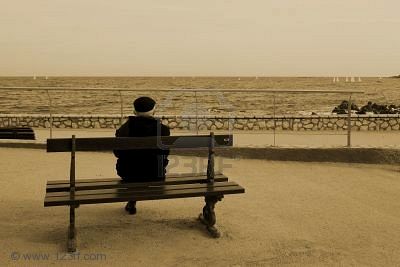
Learning how to be like Dad

I like my dad and I like my Dad–most of the time.

One thing I don’t like is how I expect my dad to be Dad. That’s just too much for a man to handle. Who can live up to those types of expectations?

And worse, I project any inadequacies of my human father onto my Divine Father, as if He fails in the same ways. Example: If my dad was mad, really mad, he would cuss and turn red and blue and purple all over. He would string together a dozen colorful words to express his anger, ten of which I cannot repeat on this blog. Being someone who likes syntax and grammar, there were times I stood in total awe. I’d think, My dad just connected profanities in a way that I didn’t know profanities could be connected. Then, I would marvel even more as I considered the hyphens and commas that must be used to make sense of all of that—imagining it were translated to the written word.

To my dad’s credit, whenever he was angry, he directed his anger at objects. He would throw a lawn mower deck across the barn, or he would scream at the wrench before clenching his fists around it and bending it into submission. (My dad was strong, and when he was angry, he was strong like Samson.) Only one time do I remember dad directing his wrath at me. We were moving a heavy-duty freezer out of the basement and into the garage. It was quite a chore and being a puny fifteen year-old, I was struggling to carry my end of it. I held my own though, trying to prove my manhood, and we made it up the stairs and to the door that opened to the garage. There, my dad bumped into the doorway, lost his grip, and dropped his end of the freezer (presumably on his foot). I instantly dropped my end and he began his tirade. I listened to his curses, his screaming, his passionate expressions of anger, and I watched as the color of his words began to express the colors on his face. Thankfully, I don’t remember the things he said to me, or to my mom, or to the freezer. But the experience was enough to shape me.

Unfortunately, when I met my Heavenly Father, I projected this image on Him. Sure, I thought of Dad as loving and gracious and forgiving and all of those things that we see in Him when we first encounter Him. But as time progressed, I started hearing that if I didn’t do this, this, and this, then God would have to do this, this, and this…to me. It was destructive really. It was a manipulative, control mechanism. And the more I heard this twisted message, the more I started to fear my Dad, in an unhealthy sort of way. What I mean is that I became fearful that if I screwed up, or made Dad mad, Dad might scream at me. Dad might turn blue in the face and cuss me into oblivion and that wouldn’t be pretty. Being a much stronger and more powerful Dad, He might just take His thumb and crush me into the ground like an ant.

Over the past couple years, and particularly over the past couple months, I have learned this is no way to think of my Dad. And I also want to be clear that this is no way to think of my dad. My dad, aside from his anger, was and is a great dad. He spent time with me, he coached my teams in sports, he taught me how to drive, he worked hard to provide for my needs and to give me a lifestyle of convenience. He bought things for me, he played games with me, he taught me how to change the oil in the car. My dad was great.

I am only stating in this post that it was unfair to expect my dad to be my Dad. So I apologize dad. And I apologize Dad.

Christian Awkwardness (2)

Could it be that Christians are awkward because of their inward bickerings?

Go to any Protestant church and you’ll likely hear someone put down the Catholics. Go to any Baptist church and you’re bound to hear someone bashing the Penecostals. Listen to a true Presbyterian long enough and you’ll realize that he or she is probably pointing the finger at a Methodist over issues of sovereignty. Go to a nondenominational church and you’ll hear them laughing at these arguments, thinking they have somehow escaped all of the controversy. But then, just bring up the “emergent church” and you’ll quickly learn there is controversy in every corner of Christendom. Some other group of Christians somewhere is heretical. And if it isn’t our responsibility to burn them at the stake, then surely God will carry out the correct punishment on judgment day. He’ll separate those goats from our sheep.

So, in Christendom, we see churches sitting on every corner, all claiming they have it right and they are the best. But, could it be part of our human condition? Do we have this tendency to think we are right and they are wrong?

What about Republicans and Democrats? What about Walgreens and CVS on opposite sides of the street? What about Chipotle, Qdoba, and Taco Bell being within a few hundred feet of each other? Who has the best prices or the best quality: Fred Meyer/Kroger, Wal-mart, Target, Safeway, or WinCo?

Isn’t everyone vying for the attention and approval of the general public? Doesn’t everyone want more followers? If that’s the case, then surely that’s not what makes Christians awkward, right?

Christian Awkwardness (1)

For the past few years, I’ve been wondering, what is it that makes Christians so awkward?

At first, I thought it was their weird language, Christianese. Christians throw around terms like sanctification, tribulation, salvation, fellowship, and hallelujah. Does anyone else use words like this? Ever? Christians may ask you questions like, “Have you been born-again?” “Have you invited Jesus into your heart?” “Do you have eternal life?” What? Then, if you meet some smarty-pants Christians, they’ll talk like they’re from another planet. They might talk about the propitiation of Christ’s sacrifice, our sinful concupiscence, the antinomian controversy, amillenialism vs. premillenialism. These cats may study soteriology and pneumatology, and they may bring up two of my favorite terms: supralapsarianism and infralapsarianism.

To which most people respond, What the hell are you talking about?

“Well, it depends on which hell you are talking about. Gehenna, Hades, or Tartaro?” says Mr. Educated Christian.

But the more I thought about it, I realized every field of study has its own lingo. Mathematicians talk about asymptotes and the anti-derivative of a function and a regular dodecahedron. Business people talk about procurements and the elasticity of demand, and they have acronyms like CFO, LLC, and CPI. Those things considered, I guess theologians can use their own lingo if they please.

But if it isn’t the lingo, what could account for this Christian awkwardness?

March Madness

I love to play with words. And ideas.

March is madness. I mean, in what other month do we describe the weather as a lion or a lamb? And college basketball, oh yes, Cinderellas still make it in the Big Dance. And yes, every year I am amazed at how horribly my bracket turns out. It is truly madness! Incomprehensible madness!

But what about today’s holiday? Could it also fit in with the theme of madness? It does happen in March, after all.

So, let’s look at what we have to work with. We have a Saint called Patrick, a pot of gold, a four leaf clover, a leprechaun, the color green, Ireland, luck, and lots of beer. Lots and lots of beer! How does it all go together?

Well, Ireland is green, and so are four-leaf clovers. Good start, eh?

The saint was a Catholic, and Catholics like beer. Another connection. 😉

Leprechauns are the weirdos who put their coins in a pot of gold at the end of rainbows. Another!

And, if you drink beer you increase your chances of getting lucky. Right?

I’d love to leave it at that, just for the sake of comedy. You know me, though, I have to dig deeper and try to find the truth of the matter. So, as I was digging, I learned that getting lucky and drinking beer have not always been the focus of the holiday. Irish pubs actually used to be closed on two days of the year–Good Friday and St. Patrick’s Day. I also learned the traditional color associated with Saint Patrick was not green, but blue. As for Patrick, the clover had something to do with him, as you can see in the icons or stained glass images of him. But if you look carefully, you’ll notice he wasn’t carrying a four-leaf clover. It was a three-leaf clover. Supposedly, he used a clover to try to explain the Holy Trinity.

I appreciate his effort, I guess, but I’m not going to follow in his footsteps. Trying to explain the Trinity is madness as well. Cheers, anyone? “To the Madness!”

Old Men

The other day, an old man boarded the bus. After paying his fare, he quietly thanked the bus driver for the ticket and sat down in the nearest seat. He shifted to find comfort, then crossed his hands on his cane for support. He didn’t look around, he didn’t say a word. He looked straight ahead, appearing content to stay alone in his own little world.

I wanted to get inside. I wanted to know what he was thinking about his surroundings, about his life. I wanted to know if he was living in the moment or if he was relishing in the past or if he was looking forward to the end. Was he thinking about how Portland used to look when he first moved here 60 years ago? Was he thinking about how he used to fill up his own car with $2 and drive the countryside, not spend $2 for a bus ride to the nearest supermarket, or $2 for a half gallon of gas? Was he thinking about the weather, hoping for the next sunny day?

Old men have always intrigued me in this way. They seem content to stay quiet, to only speak if spoken to, to not worry about their clothes matching and the like. They seem to know how people work, how life works. They aren’t surprised. They aren’t rushed. They aren’t worried. They go about their day in their own unique way.

I want that.

Home

The word “Home” can bring any number of responses to mind. For some, it brings back the smell of mom’s chocolate chip cookies. For some, it brings back memories of playing with dad, catch in the yard or hoops in the driveway. For some, it brings back harsher memories. Maybe home reminds us of a yelling father, an alcoholic father, or an absent father. Maybe home reminds us of stained carpets, dirty dishes, cans of beer, and cigarette butts overflowing the ashtray. Perhaps you never wanted friends to come over because you were ashamed of your family. Or, perhaps you always wanted friends to come over because you had so many cool toys and games to show your friends.

Home, for me, consists of three pieces:

First, there is a landscape. That landscape is the Pacific Northwest. I love the mountains, the evergreens, the waterfalls, the ocean. These things soothe my soul in a way that words can’t express.

Home also includes a group of familiar faces and places. This home resides in Indiana. It has faces like mom, dad, bro, Behr, so on and so forth. It has places in Montgomery County, in the Upland and Marion area, in the greater Indianapolis area.

The third component of home, for me, resides in books. There, I meet the wisdom of ages past. I meet the men and women who have made a difference. I meet the ideas that have shaped our government structures, our economic structures, our social structures. I meet the good, the true, the beautiful.

Somewhere, I think the three of those will converge. But I haven’t been there yet…

Weather (3)

In that poem I was talking about–the one about people being like trees–the poet uses another striking image. He says wicked people are not like trees. Wicked people are like chaff.

For those of you who live in Indiana, you know what the poet is talking about. Chaff is the husk from grains or corn. It is the shell you peel off of the wheat. It is the husk you peel off of the corn. Chaff is the worthless stuff. It has no use. You can’t eat it. It doesn’t produce anything. You can’t watch it grow. It doesn’t hold water or sunlight. Chaff falls by the wayside. It is blown away in the wind.

There are times you may stand around admiring the height or beauty of a tree, especially if you live in a place like Oregon. Trees are huge out here. In Oregon, you may even get carried away and start to hug a tree. But that’s beside the point. The point is, when was the last time any of us stood around admiring a piece of chaff? And how many of us long to be a wicked person?