It’s a lie.
You can’t believe everything you see. You know this; I know this. Sometimes, we just need a reminder.
Case 1: People with Lamborghinis
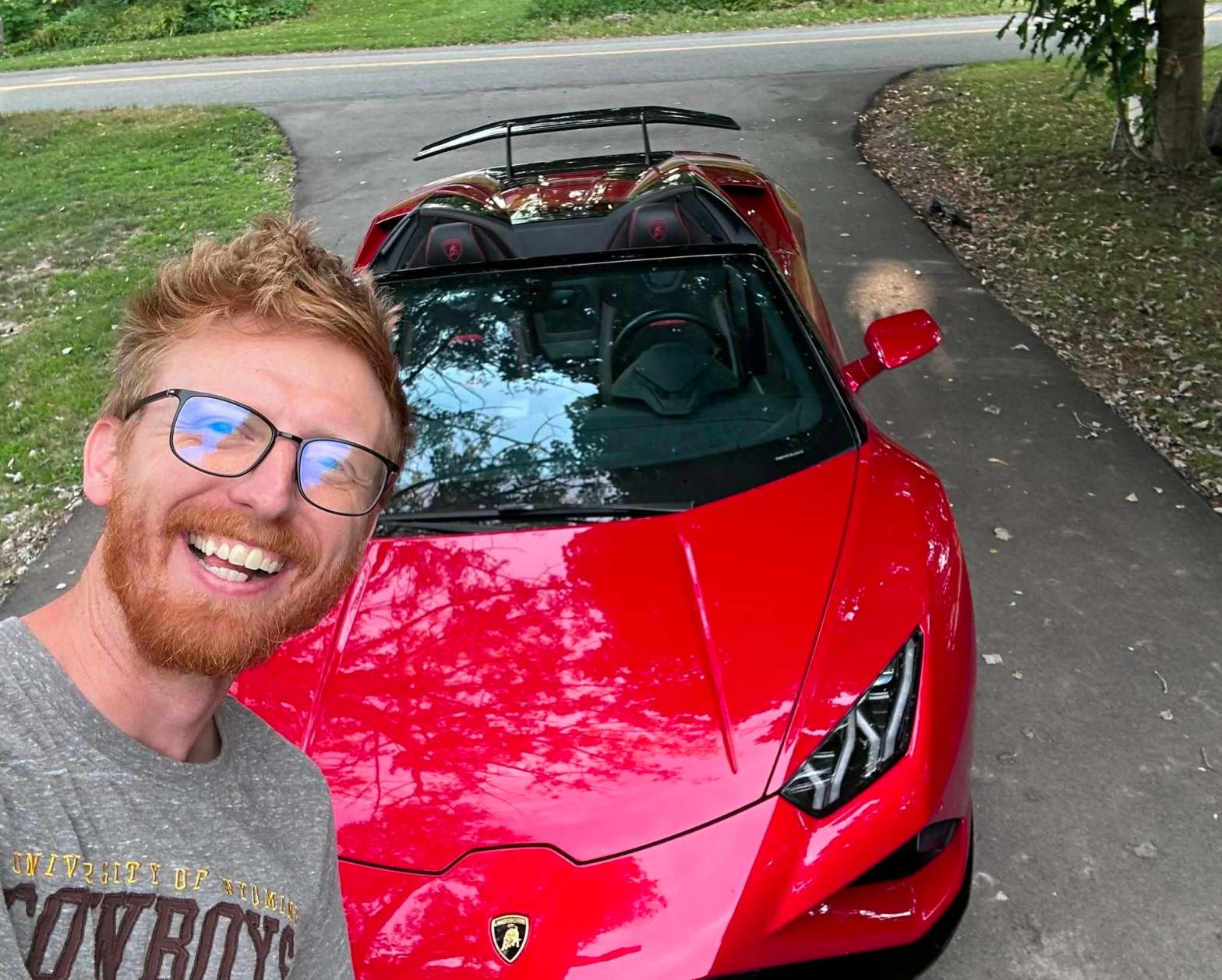
The other day I posted a picture of me with a Lamborghini. All I said was, “Mid-life crisis. It’s official!”
I posted it as a joke, as a mockery of all the influencers who rent Lambos or private jets, then take their pictures and videos with them before returning. I have friends and friends of friends who actually own Lamborghinis, who own other luxury cars, who own private planes (not jets).
But I am not an owner of those assets. I am friends with people who own those assets.
The picture seemed so believable because it looked authentic, right? A selfie, not a staged picture outside some fancy restaurant or hotel. I’m wearing yard work clothes, not a suit and tie. Leaves on the ground. Reflections on the car. And it was a real picture. That was a real Lamborghini in my real driveway.
But the only reason the car was there is because a friend of ours was borrowing it from a friend and stopped by to visit. He took me, and each of my older kids, for a quick spin. It was exhilarating! Lamborghinis have been my dream car since I was in middle school. Absolutely incredible machines! So fun!
Here’s what I never said in the caption, “Hey, look at my new purchase,” or, “Proud owner of a new Lambo,” or, “Just dropped $350K on this beast,” or anything of the sort. I never stated ownership.
I only stated, “Mid-life crisis,” which is probably true for a multitude of other reasons, not mentioned in that post and which I won’t unpack here.
“It’s official!” What’s official? The crisis.
Even in comments, I only stated things that were true and made jokes with people.
“It just glides when it’s 100mph+!” – True. I experienced that.
“I don’t trust strangers on the internet enough to let them borrow.” – True. I don’t use Turo.
“Plead the 5th…I respectfully decline to answer.” – True. And a joke.
“Only applies to Ferraris and Porsches…” – Joke.
The longer it went, the more people saw it, and I’m sure, the more people believed I actually owned a Lambo.
Why People Post on Social Media and Why It Matters
The point, the takeaway, I want for you and everyone who reads this is:
Don’t believe everything you see.
Especially on social media.
People usually only post their highlights. People only post the stuff that they’re comfortable with others seeing. They may share a lowlight, like a passing of their pet or passing of their loved ones.
In those moments, we need sympathy, we need people’s support and care and love, so we share the lowlight. That’s good and necessary. We need to keep doing that. People need support in their darkest and toughest times. Even more than just hearts or care emojis, they need a phone call, a text, a shoulder to cry on.
Most of the time, however, people are sharing their highlights. Or sharing something to increase their status, their perceived value, their self-worth. Here’s how I’d sum it up…
There are generally 3 reasons someone posts:
- To share a major accomplishment, milestone, or happening. Think pregnancy, birth, wedding, anniversary, graduation, first day of school, a move, etc.
- To share entertainment, news, or information. Think funny memes, viral videos, news they support, news they disagree with vehemently, tips, warnings, etc.
- To share products, services, projects. Think digital products, physical products, local service provider recommendations, some photography, a book you’re working on, music you’re performing, etc.
That covers probably 95% or more of what people post on social media.
But can you trust it?
Can You Trust What You See?
Can you trust that the entertainment, news, or info you’re seeing is real? I don’t know. Were you there? Do you know the people involved? Or was it a spun up story? Was it a misleading headline or an out-of-context quote that a whole story was fabricated from? Every channel, whether TV, radio, online, or otherwise, has an agenda. What was the source? How much faith do you put in it?
Can you trust the products or services? Again, a solid maybe. Maybe not? If your friend is recommending it personally, hopefully you can trust your friend. But if you’re only reading Google reviews or only reading Yelp reviews, just know that those systems can be gamed. Shoot, you can make a living as a product reviewer or service reviewer. Businesses can pay people to leave favorable reviews. It’s not supposed to happen, but it can and does every single day.
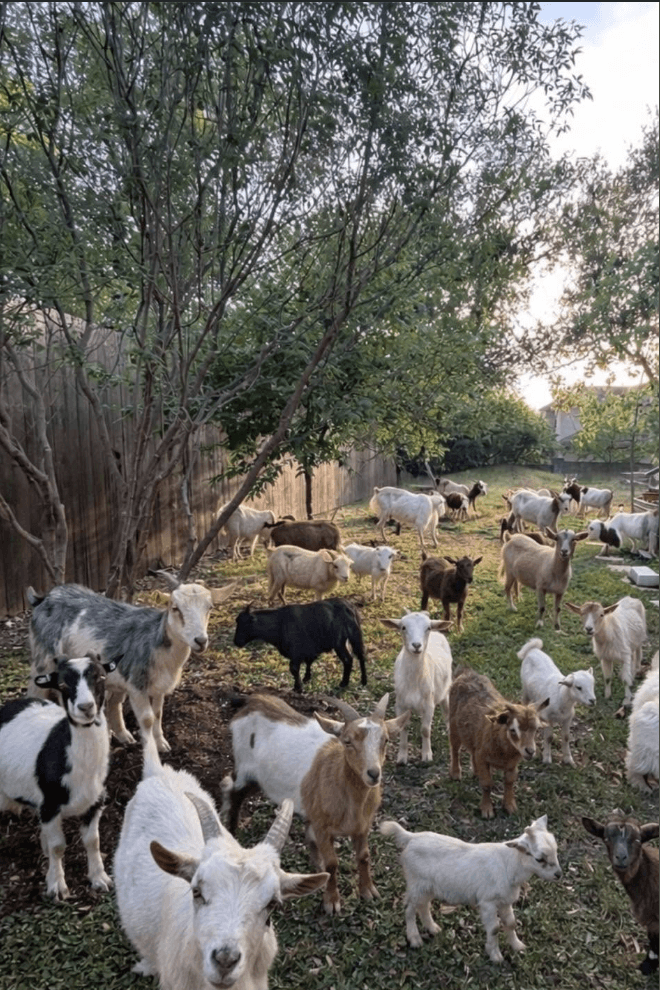
Can you trust the accomplishments or milestones? Generally. But not always. Omer might post a picture of him with a Lambo and slightly mislead you. You might fill in the gaps and believe something he didn’t actually say. A friend of mine posted a whole herd of goats on a property once, implying he and his wife got them, but never explicitly stating as such. The post was on April 1. A joke, similar to what I did, easy for people to believe.
I’m honored that people think I can afford a Lambo.
But the truth is, I am in a season of financial struggle right now. If you know someone who is hiring or could use my help with their business (marketing, operations, talent development), I’d love an introduction.
But back to the point of this piece…
Bigger Implications: AI Blurs The Line Between What is Real and What is Not
With AI being where it is now, it is tough to trust any images or videos, anymore.
What I mean is that there are videos that look totally real, but are AI-generated. There are pictures that you’d swear are real, but were AI-generated.
The line between what is real and what is fake is constantly getting blurred.
So then, the question becomes… Does it matter if it’s real or AI-generated? And either way, do I trust what I just finished reading? Do I trust what I just saw?
Do I trust the product is good, whether this review is AI-generated or an actual human?
Do I trust the people behind that news source? Do I trust the people hosting that podcast? Do I trust the sources they are quoting? Do I want to and need to verify them myself?
What do I know to be true?
What do I know to be good?
We need discernment and wisdom now, more than ever.
It used to be that a picture or video evidence was enough to be convicted or acquitted in a crime in a court case. But can it be anymore?
Movie trailers, commercials, advertisements can be made with AI now.
User-generated content started becoming a popular thing online, and now it’s being overtaken by AI. Simple example, a model you see who make reviews of skin care products or showcases a new line of clothes, that model could very well be AI-generated, not a real person.
When AI is Used for Evil
On a more grotesque note, there are sick and twisted people who have used deepfake for ill-intent. There are immature, perverse, stupid people doing deepfakes all around the world. Since 2024, high schoolers in South Korea were getting in trouble for posting explicit deepfake videos, swapping faces of people in their classes. Then Australia, U.K., and the U.S. had similar cases across high schools.
Why Do I Know About This?
My friend and I were considering doing a newsletter for parents, helping them stay on the cutting edge of AI. We desperately want AI to be used for good, not for evil. And we were flagging news articles about parents and AI, and these stories came up. It blew our minds that this was happening. We also know how dumb and perverse teenage boys can be. With no laws, no rules, no guardrails, things get very destructive, very fast.
What these people did was sick and wrong and disgusting. They should be punished. We also need better legislation around AI. We need better safeguards in our LLMs and AI models. We need better parenting, so kids aren’t running amok.
We are living in wild and turbulent times. I try to stay ignorant of evil, innocent and simple in these matters, and concern myself with the good. Be wise in what is good, and innocent to what is evil, as Paul writes to the The Romans.
A Wrap
All of this makes me think… How do we sort through the things we see on social media, on TV, anywhere? Will we start to have digital disclaimers to every piece of content: “This is AI-generated.” “This is human-created.”
When will people start twisting those and making false claims? Yesterday?
What about the things that are more in our control or sphere of influence? How do we gain more discernment as information and knowledge increase? How do we stay innocent regarding what is evil and be wise in what is good?
How can you and I use AI in a healthy way as parents? How can you and I help our kids use AI safely, because after all, this is the world they’ll grow up in? They will use it. It’s only a matter of time.
I’m writing these things so you’re aware of the world we’re living in.
Live with eyes wide open. Question what you see.
Dig deeper. Search out if something is wise, true, and good. Stay innocent of evil.
Much love!

